
Leads & estimates
Website requests, lead status, follow-up, estimate creation, customer approval, and internal cost planning.
Real example · Pebble Creek Landscaping & Lawn
Pebble Creek Media began by solving operational problems inside a real service business—then connecting the public website, office workflow, employees, customers, and billing into one company-specific system.
Start a conversationWhy it started
Generic tools could handle individual tasks, but they did not reflect the way information actually moved through the company. The owner was still the connection between too many separate pieces.
01Leads arrived from different places and could be forgotten
02Estimates and follow-up lived in texts, tools, and memory
03Scheduling required too much manual context
04Employees needed simple workflows without management access
05Customer, job, time, billing, and equipment data were separated
What was built
The system was shaped around how Pebble Creek Landscaping & Lawn wins work, schedules it, sends employees into the field, reviews completion, serves customers, and gets paid.
Website requests, lead status, follow-up, estimate creation, customer approval, and internal cost planning.
Recurring and one-time work organized around properties, crews, routes, timing, and service history.
Focused mobile access to assigned work, instructions, time, photos, and checklists without exposing management information.
Completion details, before-and-after photos, issue reporting, and management review before work closes.
Job completion connected to invoices, Stripe payment, open balances, and a branded customer dashboard.
Equipment details, inspections, maintenance, profitability planning, and the management information that needs attention.
The connected proof
An estimate request from PebbleCreekLawn.com can enter the private operating system with the contact and service context management needs to act on it.
The public website collects structured information through a branded customer experience.
It becomes a visible record with a status and next step instead of another message to remember.
The request can continue into follow-up, estimating, approval, scheduling, work, and billing.
What is real today: the public website and private operating system are connected. The screen examples below are from the working Pebble Creek system—not stock software or a purchased template.
Inside the real system
Management needs operational detail. Customers need clarity. These are two different views of the same connected business.
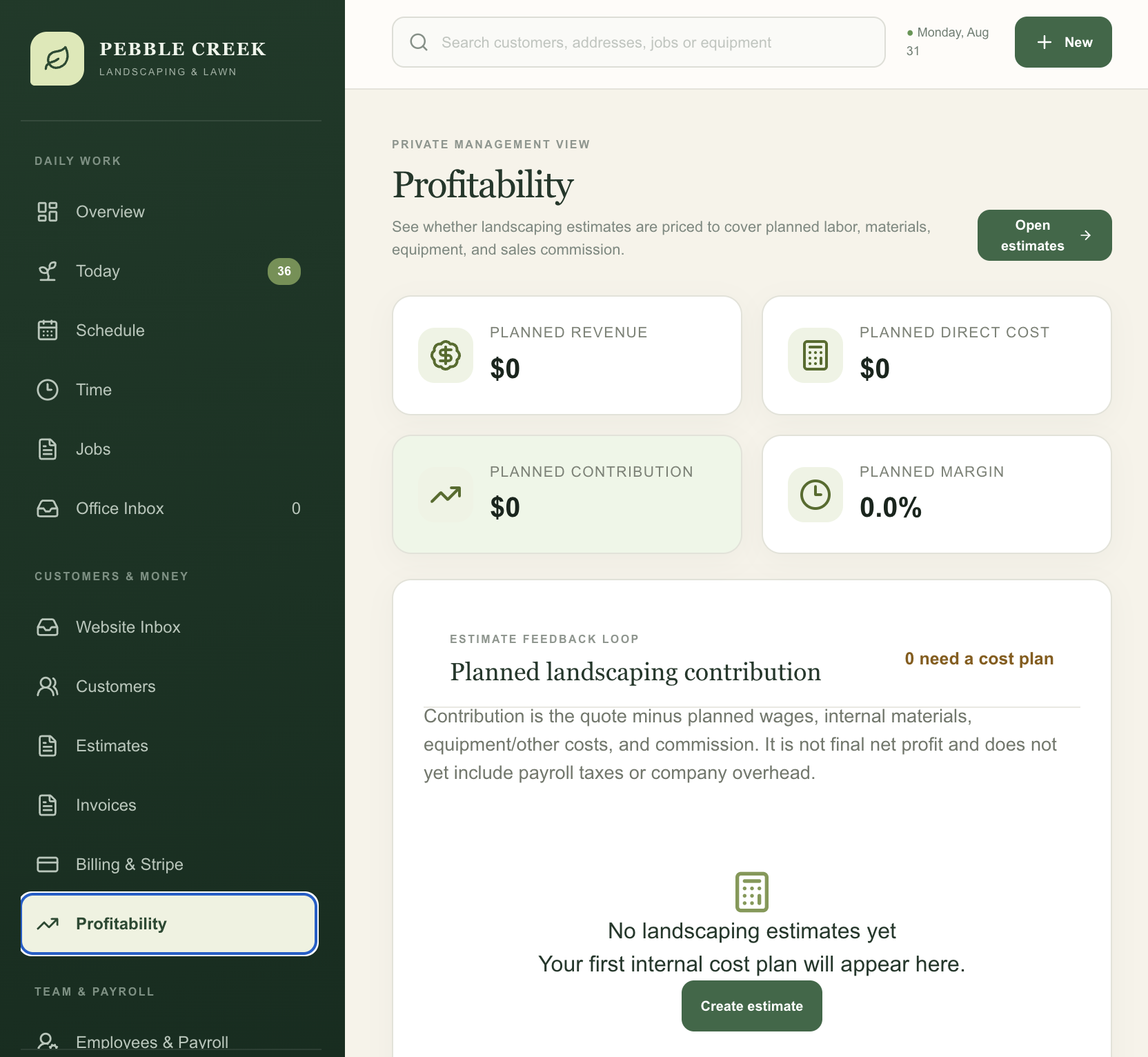
Planned revenue, direct cost, contribution, and margin can be reviewed inside the estimate workflow. Sensitive planning stays in the management view.
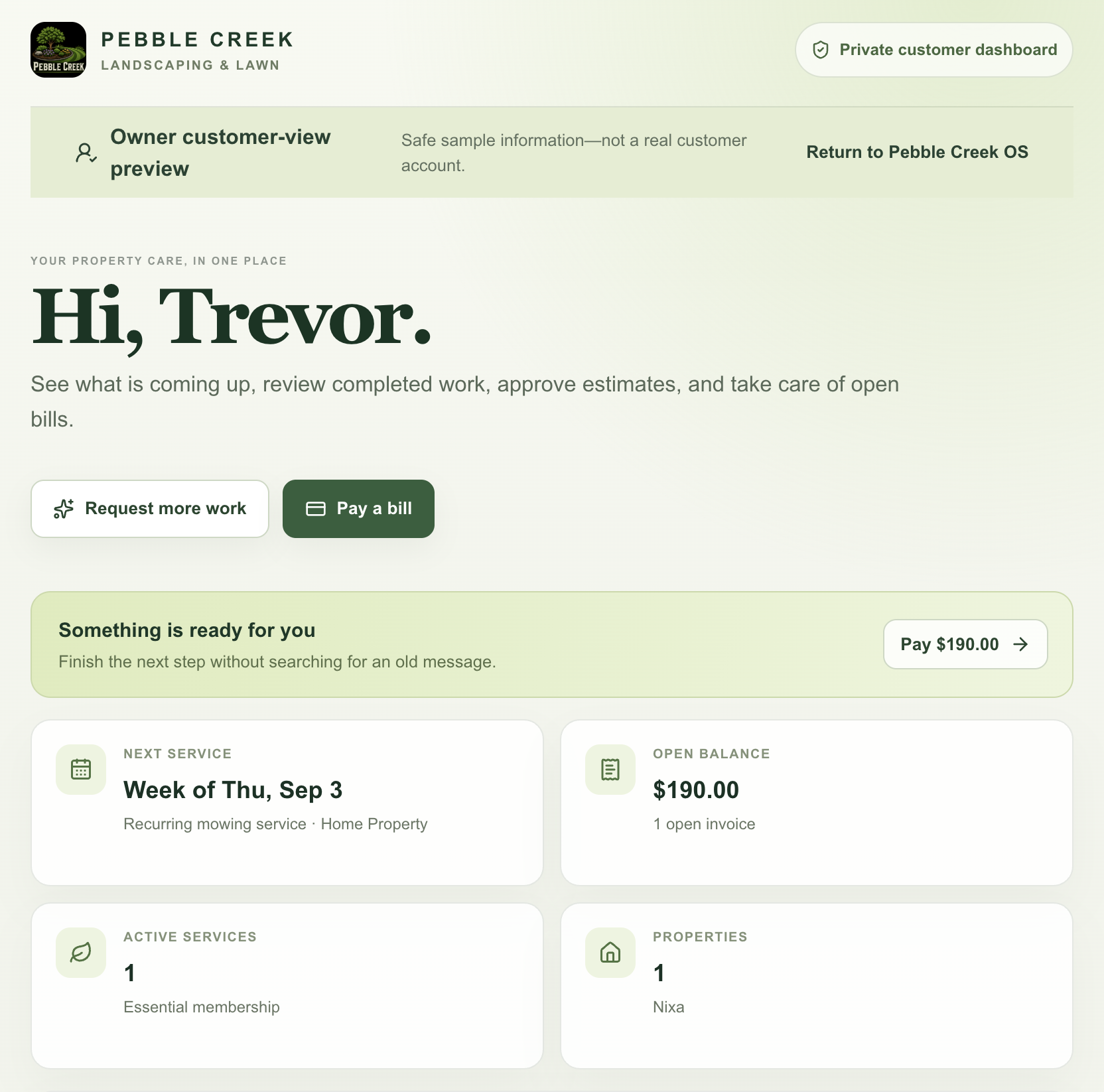
Upcoming service, more-work requests, approvals, open balances, and property information can be presented through the company’s own experience.
Demonstration disclosure: all names, dates, balances, service details, and account information visible in these examples are fictional sample data. No real customer information appears on this page.
What changed operationally
These are practical observations from what the system is designed to do—not invented percentages or unsupported savings claims.
The website request, customer, property, estimate, job, service history, and payment can stay connected instead of living in unrelated tools.
An unhandled request or unfinished management step remains part of a visible queue rather than disappearing into a message history.
Management, employees, and customers can each receive a focused experience built around what they actually need to see and do.
The operating system grew from real problems inside the business, and new workflows can be evaluated as the operation changes.
We will not manufacture growth percentages, time savings, or return-on-investment claims. Credible before-and-after measurements can be added as the business establishes a useful baseline.
What it taught us
The strongest system did not replace management. It put the right information in front of the right person at the right time.
A better fit starts here
Tell us how your company works, what keeps getting lost, and what you wish your software did. We’ll help you decide what makes sense.
Start a conversation